
Kia ora,
This morning we have someone I’ve known for longer than I care to admit but we’ve never met in person. Who knows, one day we might.
Settle in with a cuppa … here we go:
Who are you?
I’m Londoner, married to an American, with three grown-up kids. I’ve run parallel lives. One track was as an IT Consultant, which is very difficult to make sound interesting. And the other was columnist – for GQ and Esquire – writer of fiction – I’ll link some books – and musician.
Having given up fulltime work a few years ago, I now dabble in consultancy, I write whenever I please, and – mostly – I engineer and produce my daughters’ band, Grisly Habit. Which, actually, is just about the best job I’ve ever had.

Grisly Habit – Promo for Yellow Eyes
Favourite genre/s to read or write?
As a writer, I’m not very respectful of genre. I sort of skip about as ideas occur to me. If you look at my collections of short stories, you’ll find science fiction, family drama, philosophical allegory, unabashed comedy, social satire, literary parody, gothic horror.
This lack of genre-focus has probably been a bad thing for my career. Book-buyers prefer to know what they’re going to get, so they tend to look for what they like on the shelves where they found stuff they’ve liked before.
How I choose what to read is a bit undisciplined too. What attracts me is either an inventive premise – ‘Oh, that’s clever – what are they going to do with that?’ – or beautiful and engaging prose – “Now, that’s a terrific opening para – I’m in.”
The use of language is very important to me. I don’t think it’s possible to separate content and style. In prose, form and function are the same thing.
Please tell us about your latest work
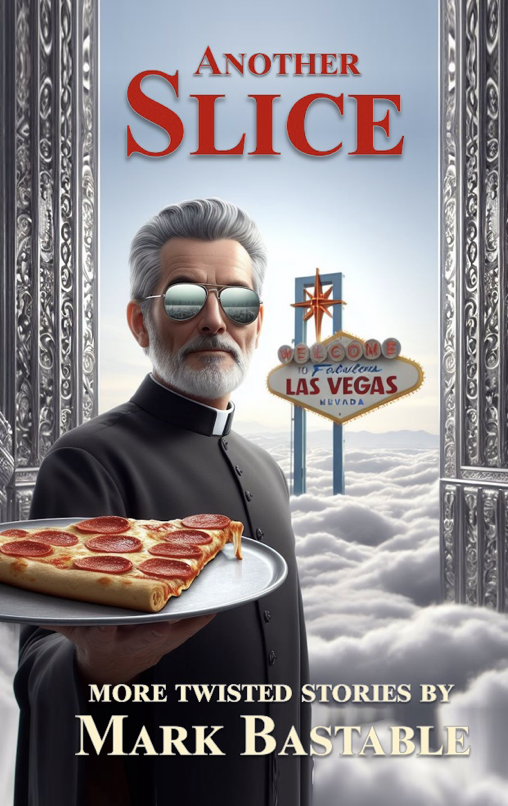
This summer I published two collections of short stories – What’s the Catch? and Another Slice. What the stories have in common, I think, is twistiness.
The thing about twists, though, is that they have to be set up in such a way that the reader, though taken unawares, realizes that, actually, they ought to have seen that coming. Someone once mailed me and said, “I was reading your book at home and I startled my husband when I suddenly said aloud, ‘What? No, because…Wait. I thought… Oh, you bastard!’”
That’s my favourite reader feedback ever.

What’s the catch? Click for Amazon
Another Slice Click for Amazon
What’s your main character like?
My novels tend not to have main characters. They have casts of characters. It’s partly because I don’t believe in goodies and baddies. All human beings think that they’re doing the right thing, or at least that what they do is justifiable. So it’s my job to make the characters comprehensible, if not sympathetic, whatever they do.
However, you can’t have everyone being sympathetic at once, so I try to cause the reader’s loyalties to shift and fluctuate as the story unfolds. A reviewer said of one of my books, “I thought at the beginning I was on so-and-so’s side, but by the middle, I’d decided she was a terrible prig and I found myself siding more and more with whatsisname, who I really hadn’t liked at the start.” I was very pleased with that.
See, there’s a very respected and much-cited bit of advice about writing fiction – that you need to know more about your characters than is actually necessary for the story. So – yeah – what’s her favourite colour? Does she have siblings? Does she approve of microwaveable rice?
I don’t do that. I know, from the start, what each character represents, in terms of their role in the story. But it’s only by writing it that I discover that – I dunno – they collect trilobite fossils. And they collect trilobite fossils because it matters to the story.
If it doesn’t matter, I probably haven’t thought about it.
On the other hand, I’d have any of them over to dinner, simply because I’d be fascinated to discover what they say when I’m not telling them what to say.
What piece of advice would you give a new writer?
In my twenties, I worked in publishing. One of my jobs was to read manuscripts that arrived in the mail. We published a lot of genre fiction, so a lot of unsolicited genre fiction piled up on the doormat.
There was, for instance, a Western. Good characters, totally workable plot, nicely written and bang on the money for its market. It had been written by an unpublished writer in Kent somewhere. I was impressed. As I said in my report, “This is just as good as anything in our current gunslinger series – and possibly better. We should consider buying it.”
One lunchtime (in the pub, obviously) the senior editor took me aside and said, “About this cowboy novel. For a start, as you point out, we already have a gunslinger series. But if we didn’t have a gunslinger series, I’d go to the bloke who writes our gunslinger series and commission him to write six cowboy novels over the next two years. I know he can do it because in the last two years he’s written us six Georgian romances, six adultery dramas and six vampire novels. He’s very good at genre fiction, very prompt, very professional and requires practically no editorial input. Yes, you’re right, Mark – this manuscript is at least as good as any of our gunslinger series. But so what?”
Harsh, isn’t it? But, commercially, it’s unarguable. My advice to a new writer would be, if you think you’re every bit as good as someone else who writes stuff like you’re writing, you’re writing the wrong stuff. You have to be every bit as good as yourself. So figure out who you are.
What part of writing do you find the hardest?
Like most writers, starting.
Oh, and I don’t do research. Hate it. Some writers think that’s the fun bit. I don’t. My stories all take place in a universe that I already know about, but with made-up stuff chucked in.
Pantser or outliner? And why?
About the time I was writing my first novel, my brother Jonathan was writing his. I recommend it – and not just because I’m in it.
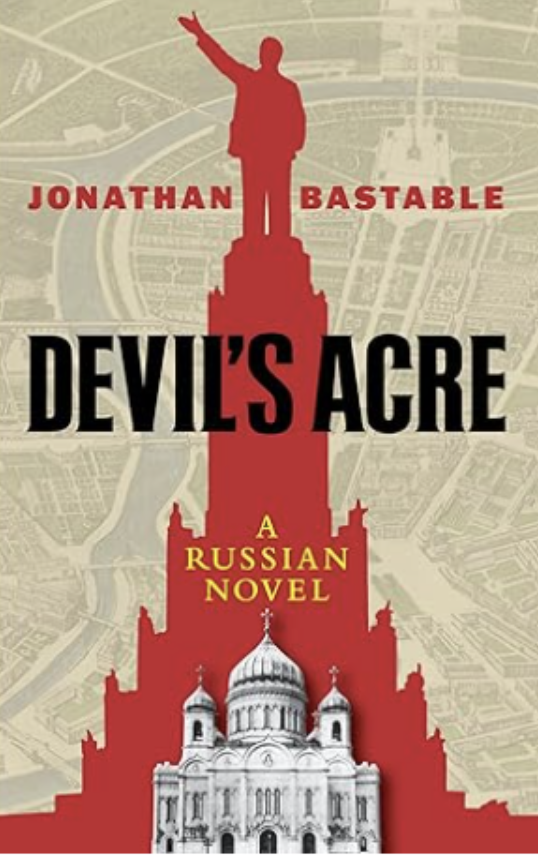
Devil’s Acre: Click for Amazon
I called him and asked how it was going.
“Pretty good. Just finished chapter ten.”
“Blimey,” I said, “that’s going some. You only started a month ago, and you’re already up to chapter ten?”
“No, no. I have a map of the whole novel. I just happened to be working on chapter ten today.”
“You have a map of the novel? You plan the whole story?”
“Of course. Don’t you?”
“No. God, no.”
“How do you know the structure then?”
“Er…are you supposed to know that? I just start by typing ‘Once upon a time…’ and I stop typing when I reach ‘…happily ever after.’”
My glib but true line is that if I knew how it ended, I’d have no reason to write it. (Same!)
But it’s not that I don’t have structure. What I usually have is a question or a problem, and a bunch of characters who each represent an aspect of that problem. Their attitudes, emotions, aspirations are incompatible but interwoven.
I put them all on toboggans at the top of a steep hill, and I push them, and I see what happens.
When I push them, there’s stuff I already know. Like, I know one of them dies, but I don’t know which, or how. I know that something happens in the Whispering Gallery of St Paul’s Cathedral. I suspect that that guy there is going to mess everyone else about, though I have no idea why he does that.
As I write, the story grows, and I keep plaiting the strands back in, so that it doesn’t get untidy. There are bits I’ll chop out later, and bits that’ll need shaping, but I can always tell what’s going to work and what’s not.
The best part of writing like this is seeing a character take over. When I started to write The Penny Falls, Stephen was just there to give Pablo someone to talk to. I thought he was a device. But he turned out to be the emotional and functional core of the book.
If I’d mapped it out, that would never have happened. He would never have existed.
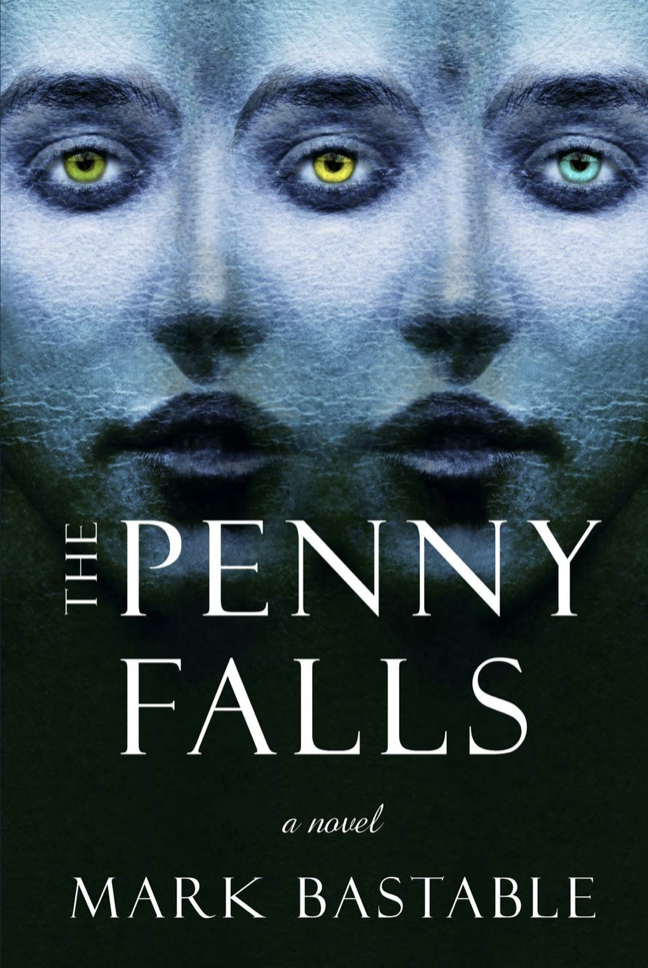
The Penny Falls: Click for Amazon
Thank you for chatting with us, Mark.
Oh, you’re welcome. Have I rambled on too long? I mean, this is what happens when you ask a writer to talk about writing.
Or maybe it’s just me.
I don’t get out much.
 Cat Connor
What an interesting life, including the IT stuff. I love music, so I think it’s fantastic that you’re involved in your daughter’s band. All that and multi-genre, too – wow! Thanks for sharing and I wish you much success.